

The Pied Piper of Hamelin led all the children of Hamelin away when the town refused to pay the piper. The same can happen to children’s doctors when their employers cannot keep pace with high Medicaid payer mixes in competitive markets.
Several new data sets have improved our understanding of the economics of pediatric physician practices. Acuvance DataRise’s 2026 Provider Compensation Data draws a vivid new picture of local market compensation for pediatric physician specialists.
Native Video Player
Leading Pediatric Compensation in New Directions
YouTube Video Player
Acuvance DataRise has aggregated data from the American Board of Pediatrics, commercial insurance carriers, the Centers for Medicare and Medicaid Services, and other sources focused on pediatric physician specialists. Combining these data sources with statistical methods lets us understand the ranges of viable pediatrician compensation in each market.
One of the most striking differences between pediatric physician specialists and all other physician specialists is the high percentage of Medicaid patients served by pediatricians. According to the American Board of Pediatrics’ annual enrollment survey, the median Medicaid payor mix is 40% or higher for 84% of pediatric specialties. That means the Medicaid payor mix is higher than 40% for half of all pediatric physicians in all those specialties.
In most states, Medicaid is the lowest paying payor. Medicaid reimbursement is generally much lower than Medicare in most states. Fortunately, commercial insurance reimbursement for pediatric physician specialties is often observed to be higher than their counterparts in non-pediatric specialties.
It is common for the highest physician reimbursement in each state to be for pediatric physicians affiliated with major children’s hospitals.
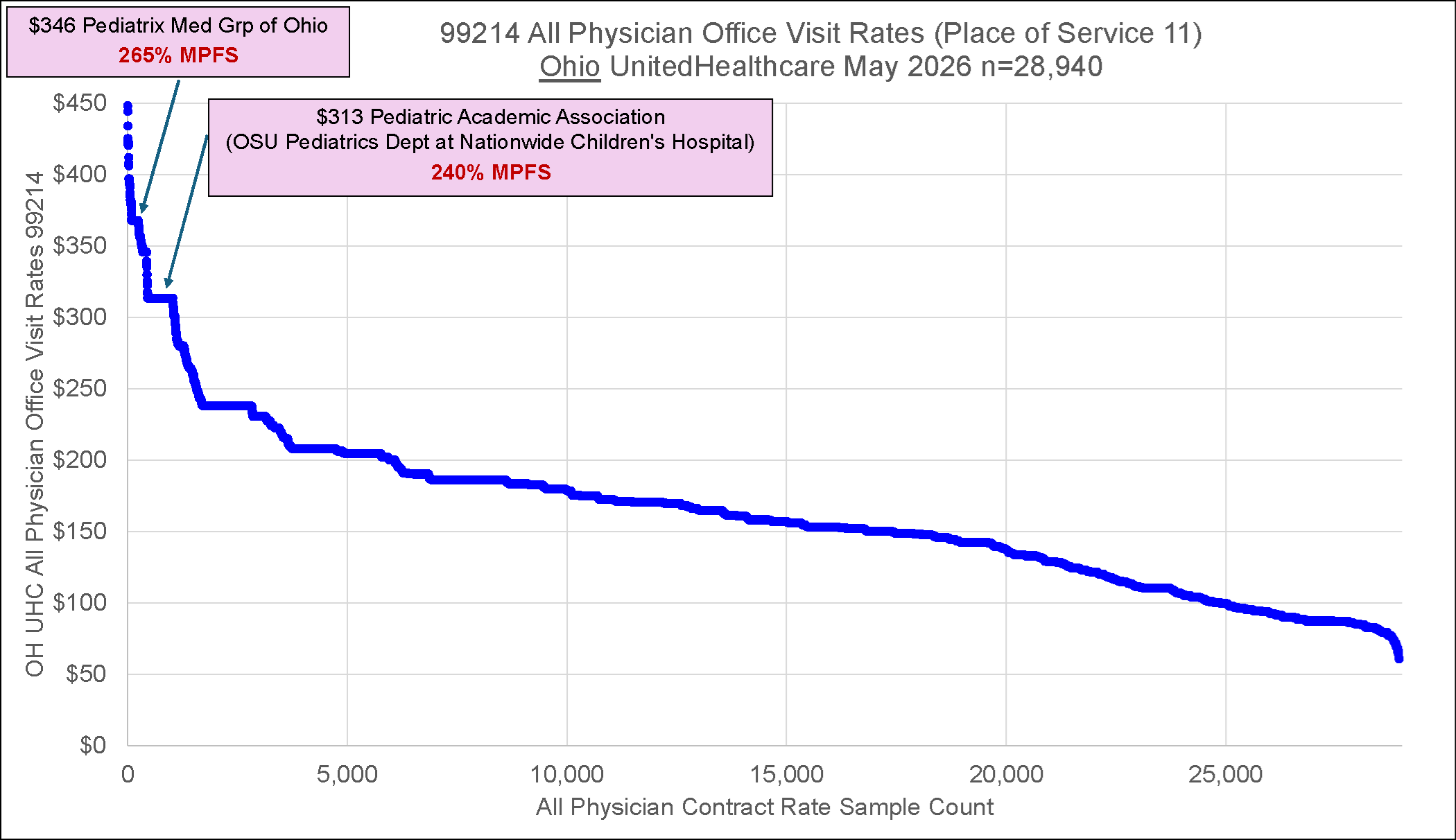
For example, the faculty medical group of the Ohio State University Pediatrics Department is affiliated with the Nationwide Columbus Children’s Hospital in Ohio. As a medical group, this organization has the highest group reimbursement rate in the State of Ohio for office visit reimbursement under UnitedHealthcare.
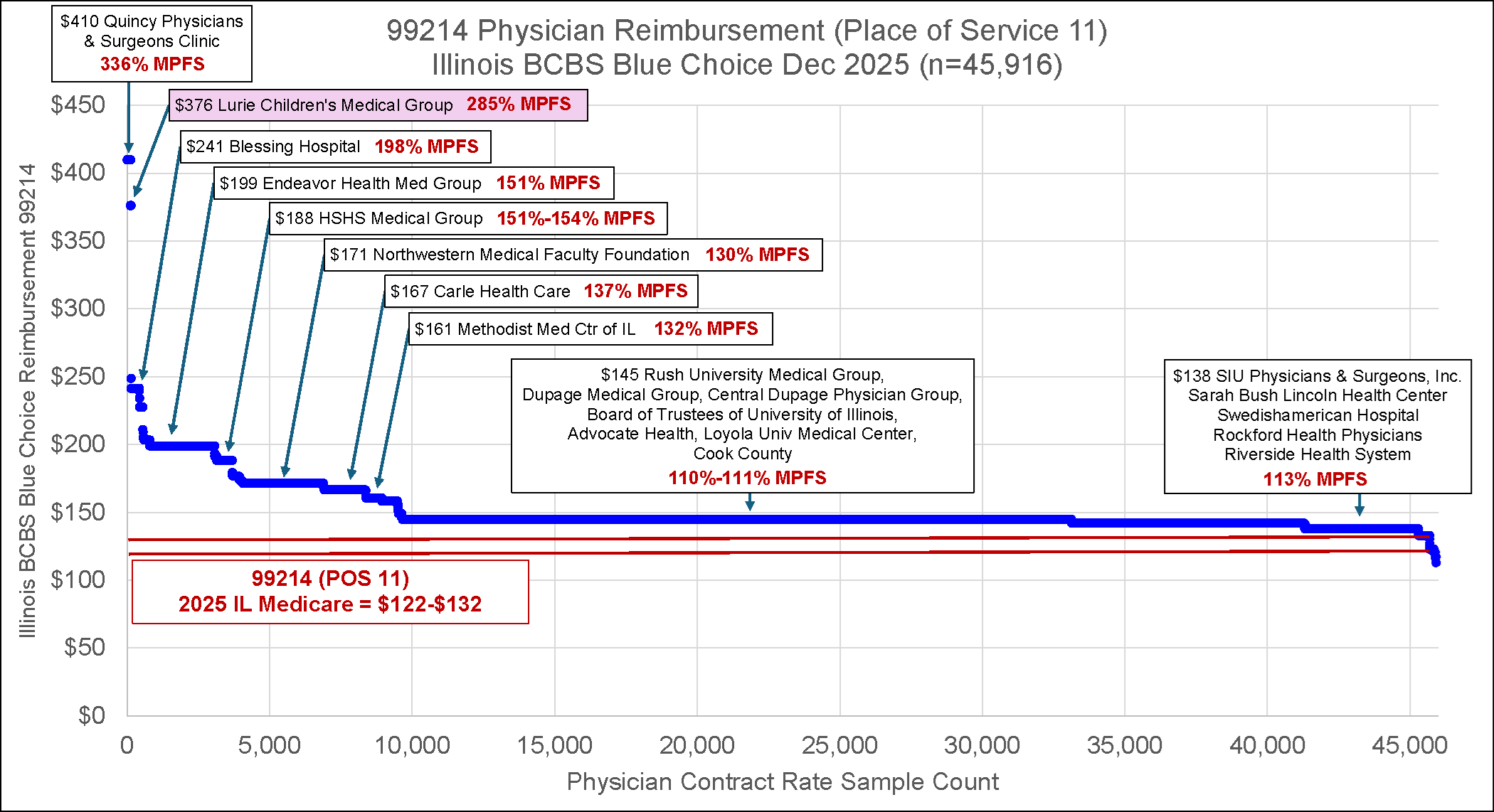
In Illinois, the pediatric medical group affiliated with Lurie Children’s Hospital of Chicago has the second highest group reimbursement rate for office visits in the whole state under the largest payer, Blue Cross Blue Shield.
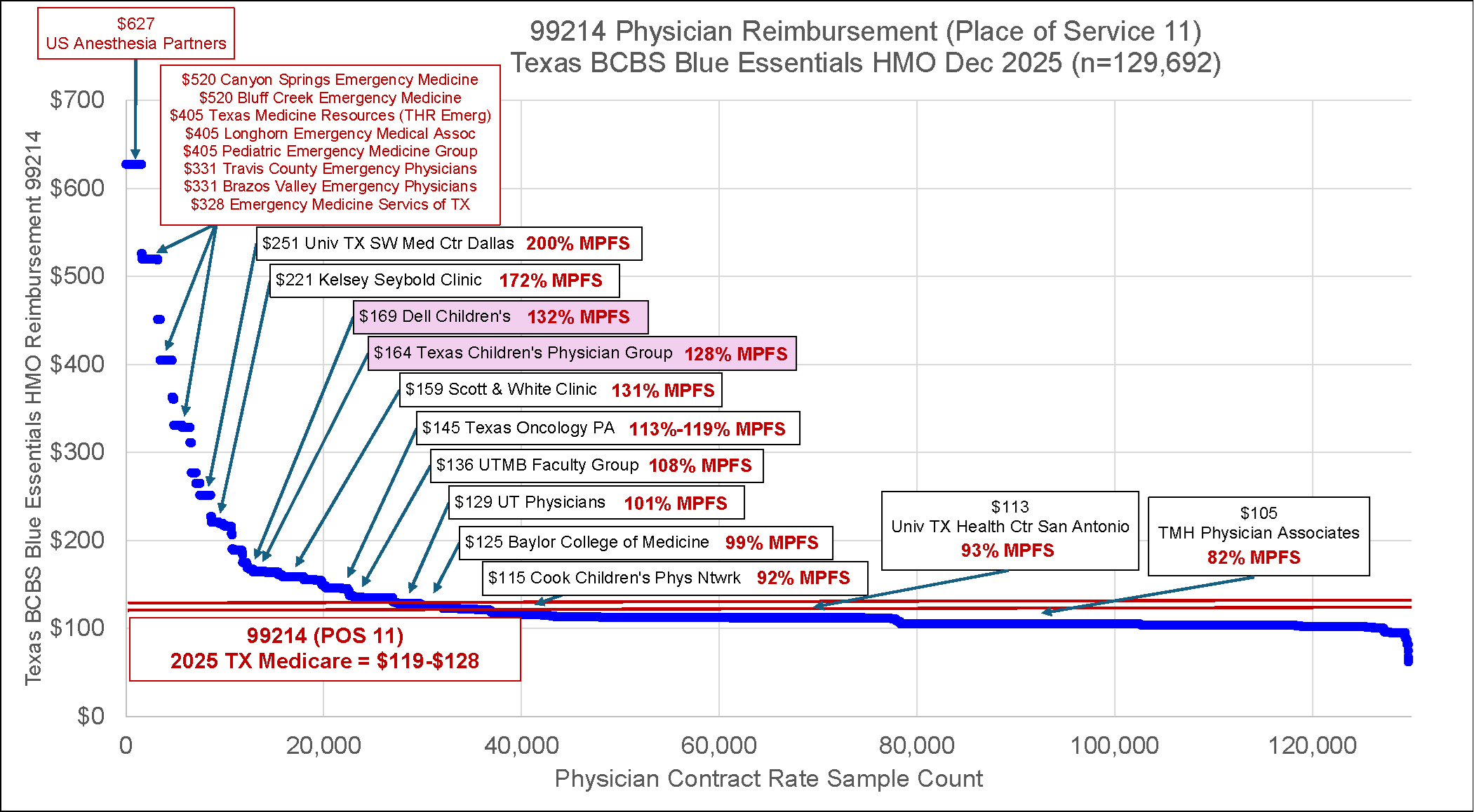
In Texas, The Dell Children’s Medical Center doctors affiliated with Ascension Seton have one of the highest group rates in the state for office visits. That is followed closely by the Texas Children’s Physician Group in Houston.
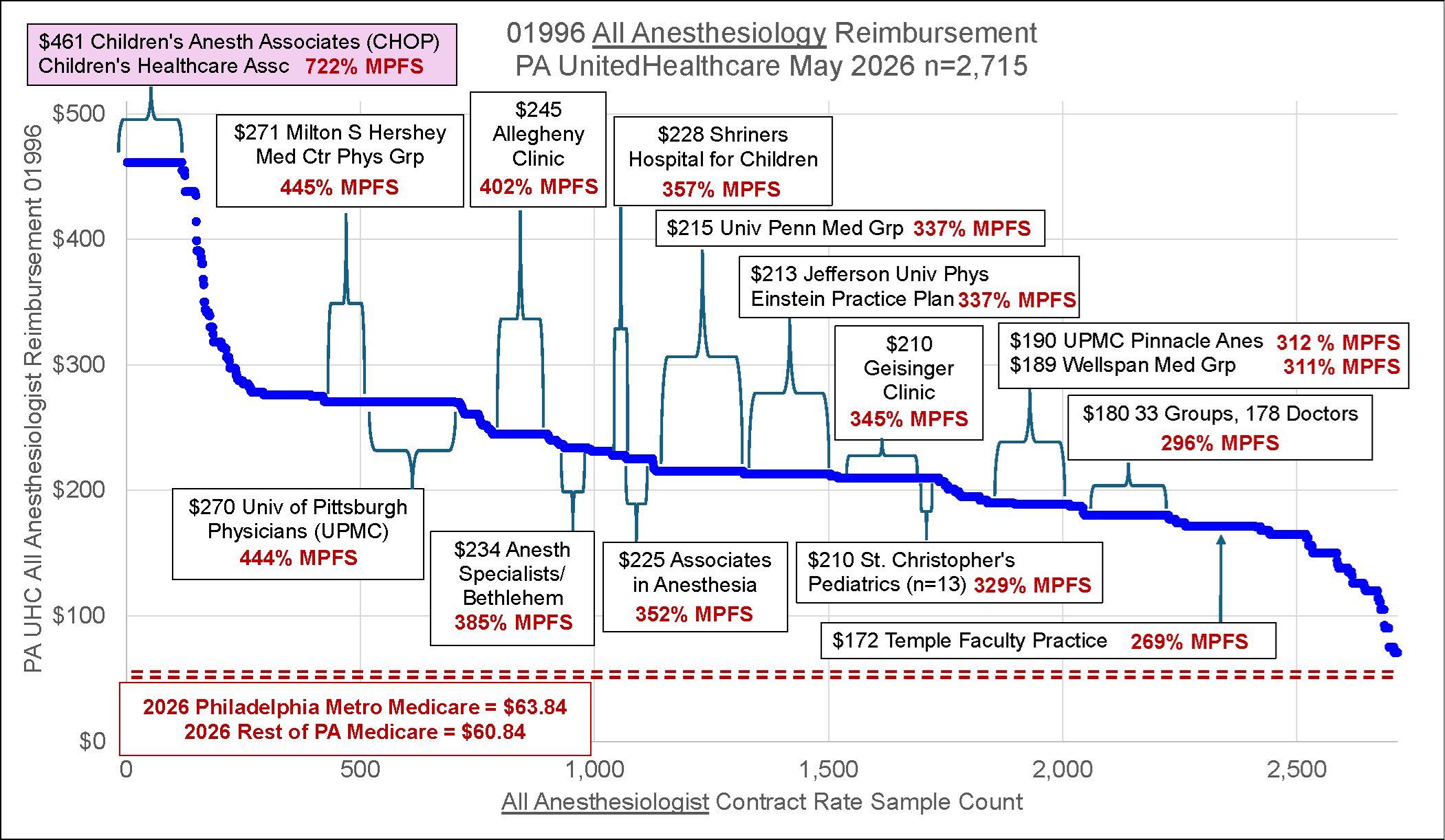
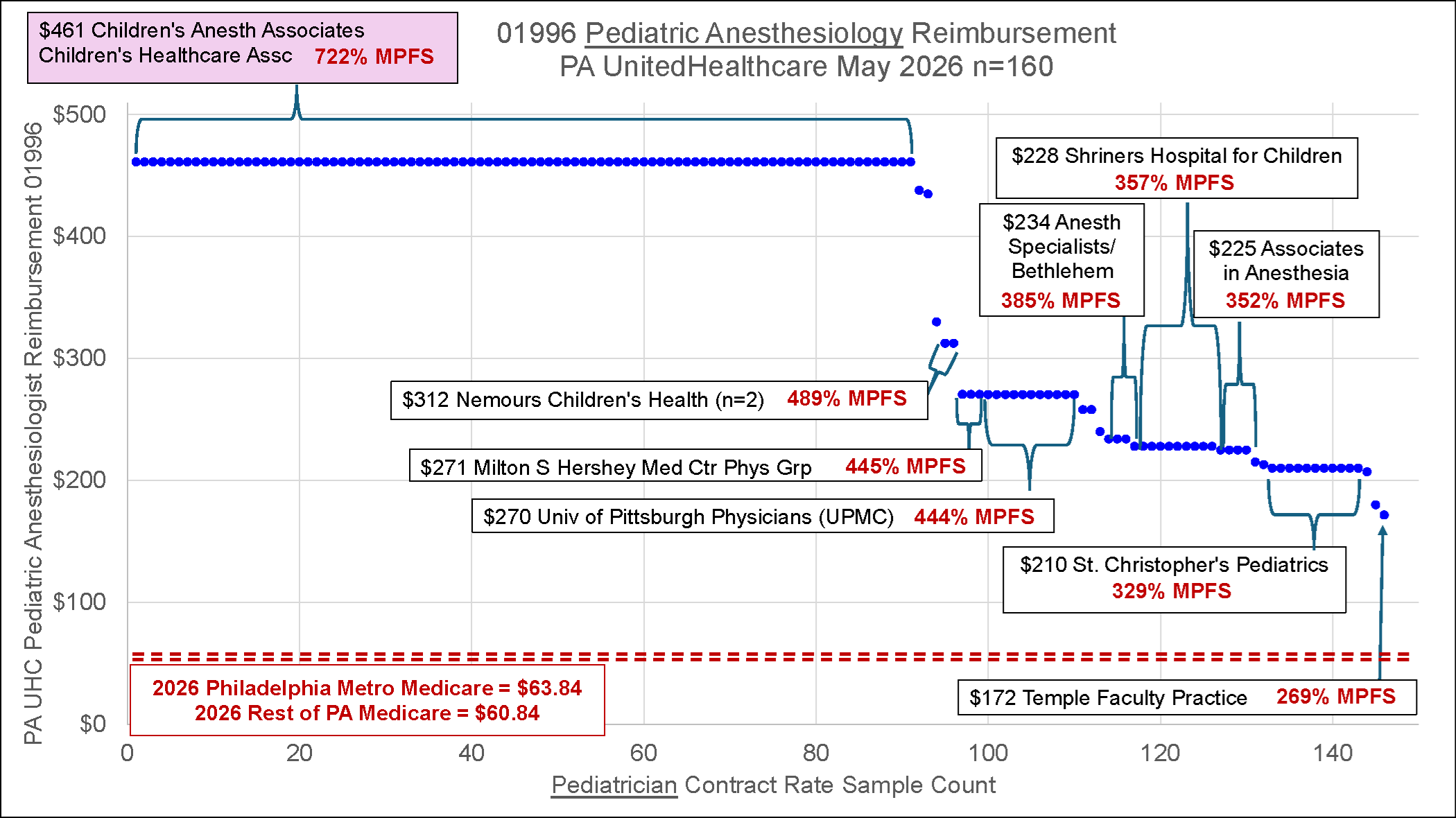
This trend applies across and within pediatric specialties as well. In Pennsylvania, reimbursement for the pediatric anesthesiologists group affiliated with Children’s Hospital of Philadelphia towers above all other anesthesiologists and pediatric anesthesiologists under UnitedHealthcare.
While the highest reimbursement rates in these states is attributed to pediatric physician organizations, that does not mean all pediatric doctors in each state are being reimbursed the same.
Going back to our example in Pennsylvania, the pediatric subset of all anesthesiologists in the state reveals wide variation in reimbursement. Many organizations that employ both pediatric specialists and non-pediatric specialists negotiated the exact same reimbursement for both subgroups. The high reimbursement outliers tend to be affiliated with strictly pediatric-focused children’s hospitals.
This phenomenon raises important philosophical questions for the Fair Market Value of physician compensation.
Foremost among these, is the question of how do you determine Fair Market Value, when you empirically know that the largest employer of pediatric specialists in your market is reimbursed twice as much as its competitors?
In the pediatric anesthesiology example above, both the median and 75th percentile would be represented by docs in the Children’s Hospital of Philadelphia group. Does that mean all the pediatric anesthesiologists in the bottom 40% can be compensated the same as these Children’s Hospital of Philadelphia docs?
You could certainly make that argument. These organizations all compete for the exact same pediatric anesthesiologists. Should compensation decrease over 50% because a doc leaves Children’s Hospital of Philadelphia to go to St. Christopher’s or the Shriner’s Hospital? That doesn’t really seem fair. It’s not the doctors’ fault that their organization’s payer contracts are not as good.
It may be worth considering the highest and best use principle from real estate valuation. If a pediatric anesthesiologist is geographically located within commuting distance of Philadelphia, a good argument could be made that Fair Market Value compensation should be based on the economics of doctors affiliated with Children’s Hospital of Philadelphia.
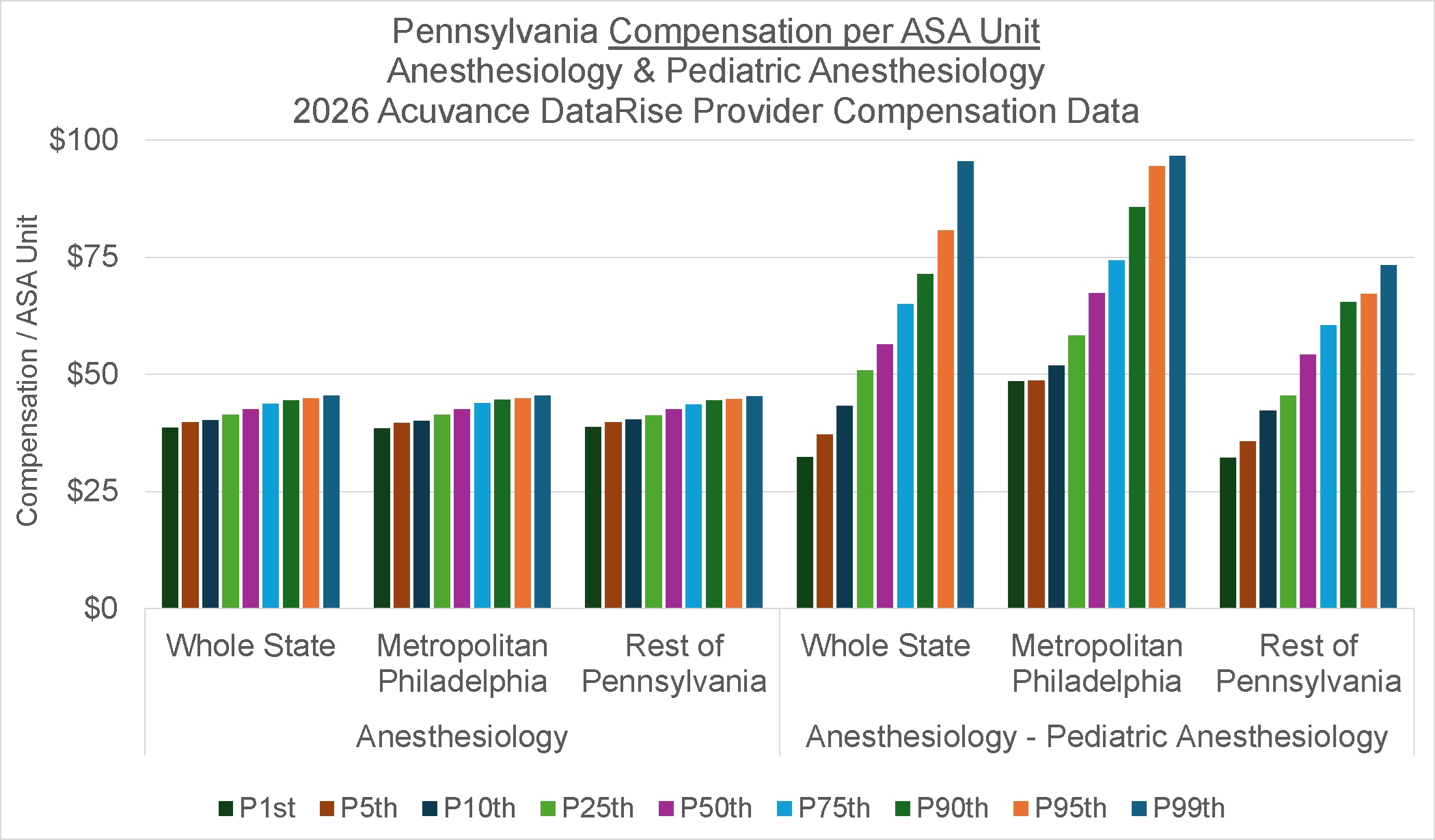
If we’re talking about doctors on the other side of the state in Pittsburgh, than that’s a different story. Medical groups affiliated with University of Pittsburgh Medical Center (UPMC) would likely have the best economics for pediatric specialists in that region.
The economics of pediatric physician medical groups is highly nuanced. Reimbursement for the same pediatric specialists sometimes vary 100% between medical groups in the same market, let alone across whole states or the nation.
In the wake of the One Big Beautiful Bill Act, Medicaid reimbursement is probably not going to improve any time soon. In fact, Medicaid reimbursement will probably get worse in states that can not afford to replace withdrawn federal funds.
Medicaid challenges over the next eight (8) years will affect pediatric medical groups especially hard because of their high Medicaid payer mix. Leaders who keep their eye on the ball in this nuanced market may identify opportunities to compete more effectively in terms of physician compensation and professional reimbursement.